PERSONAL NOTE
Hi everybody. I'm excited that it's the month of June. On Father's Day weekend, the NASCAR races are coming to Coronado, CA (across the bay from San Diego). Most of you know by now that I am a big auto racing fan. This is the first-ever race in the San Diego area, and it will be a 3.4-mile road course on North Island Naval Air Base. They have never raced on an active military base. Frankly, I am a little challenged trying to picture what it will look like. I am treating myself to the VIP package, so if you watch the race, look for me in Victory Lane after the race. I'll report on this next month. Last month, we looked at kindness and consideration; this month, I am focusing on de-escalating when situations get tense, so let's get into it.
ARTICLE
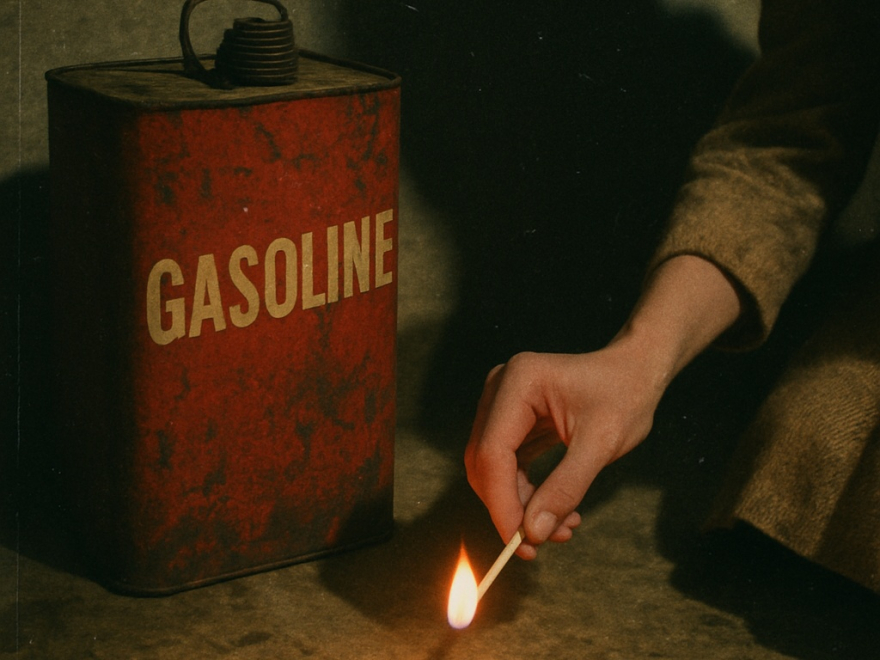
Don’t Pour Gasoline on the Fire
Have you noticed lately how quickly things seem to escalate? A simple disagreement turns into an argument. A difference of opinion becomes personal. Someone says something online, and suddenly the comment section looks like a scene from a reality show reunion special. And honestly, many people are emotionally exhausted.
There is so much noise, tension, uncertainty, stress, and division in the world right now that it doesn’t take much for emotions to flare. People are carrying frustration from work, financial concerns, family stress, politics, social media overload, world events, and the nonstop pressure of trying to keep up with life itself.
Sometimes it feels like everyone is walking around carrying an invisible can of gasoline just waiting for a spark.
But here’s something important to remember: You do not have to pour gasoline on the fire. Not every disagreement requires a battle. Not every comment deserves a response. Not every misunderstanding needs to become a relationship-ending event.
One of the greatest forms of emotional strength today is learning how to de-escalate instead of intensifing. That doesn’t mean staying silent when something matters to you. It doesn’t mean becoming passive or pretending you don’t have opinions. It simply means learning how to respond in a way that lowers the emotional temperature instead of raising it.
Sometimes de-escalation looks like:
• Pausing before reacting
• Choosing curiosity over assumptions
• Listening instead of interrupting
• Walking away from conversations that are becoming toxic
• Refusing to match someone else’s anger
• Taking a breath before sending the text or email you may regret later
And perhaps most importantly…remembering that protecting your peace is often more valuable than proving your point.
The truth is that people rarely calm down when they feel attacked. They become defensive. Guarded. Reactive. But when someone feels heard, respected, and safe, conversations often soften naturally. You may never fully change another person’s opinion, but you can absolutely change the tone of an interaction. That matters. In a world that often rewards outrage, choosing calm is powerful. Choosing kindness is powerful. Choosing not to escalate is powerful.
And no, you won’t do it perfectly all the time. None of us will. We’re human. We all have moments where stress, frustration, or emotion gets the better of us. (If you’ve ever argued with customer service while muttering, “Representative… REPRESENTATIVE!” under your breath, welcome to the club.) But even small moments of awareness can make a tremendous difference. Because every time you choose patience over reaction…understanding over assumption…or calm over chaos…you become part of the solution instead of part of the fire.
And right now, the world could use a little more of that.
RECENT PODCAST
I recently did a podcast for the San Diego Region of BNI (Business Networking International) and wanted to attach a link. This is on YouTube and is about 32 minutes long. Here's the link Stressed, Burned Out, and Overwhelmed | Stress Reduction for Business Owners w/ Jan Cerasaro.
I LOVE GETTING YOUR COMMENTS
Hit reply to let me know your thoughts or challenges.
Linked In
Stay safe, healthy, and happy!
Coach Jan
|